Thursday, 29 January 2015

“Enterprise Asset Management Market by Software Applications by Services - Worldwide Forecasts and Analysis (2014-2019)”
The enterprise asset management market is expected to grow from $ 2.49 Billion in 2013 to $ 4.23 Billion in 2019 at an estimated CAGR of 9.6%
From the past few years, the market for enterprise asset management (EAM) has developed and has adopted the latest software applications with the increasing demand among organizations from various industries. Enterprise asset management is a new model that is presently gaining approval in asset centric organizations where repair activities have to be closely synchronized with the additional enterprise extensive functions such as stock and purchasing management. The successful implementation of EAM software applications helps organizations to discover the origin of asset related problems, thereby, reducing the lifecycle time of assets.
The overall enterprise asset management market in this study is defined as the summation of EAM software and services.
North America, Europe and Middle East and Africa have the highest EAM penetration, and the regions such as Asia Pacific and Latin America offer a lot of opportunities for EAM vendors as many organizations are yet to adopt EAM software solutions.
For a well-organized and sustainable enterprise asset management, organizations need to restructure its industry processes by making it visible, and integrating it with other functions. Several organizations have not implemented EAM solutions because of the complication and cost involved in it. Along with this, companies need to support its business goals with the asset strategies by supporting asset management processes that function across various departments such as finance, HR and compliance.

Wednesday, 28 January 2015

Companies shift focus to cloud and mobile maintenance solutions, driving record growth for Maintenance Assistant Inc.

North American manufacturing, energy, and facilities management industries are investing in cloud based technology to transform their increasingly mobile workforce. This strong adoption of mobile and cloud-based solutions has driven a third straight year of record growth for Maintenance Assistant Inc.

  • Share on TwitterShare on FacebookShare on Google+Share on LinkedInShare on PinterestEmail a friend
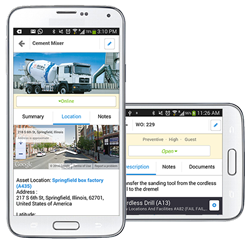
MA CMMS Mobile Screenshots
MA CMMS Mobile
"The annual growth of our cloud user base has been consistently well over 50%, with annual revenue growth in excess of 100% for a third straight year." - Marc Castel, CEO & Co-Founder
(PRWEB) January 27, 2015
Maintenance Assistant Inc, a leading provider of cloud-based maintenance management software, announces another year of record growth and customer acquisition.
“Since our launch in 2007, Maintenance Assistant(MA) has emerged as one of the fastest growing asset management and computerized maintenance management software (CMMS) providers,” said Marc Castel, CEO. “Our success in 2014 is a result of our decision to move away from our original on-premises software three years ago, and fully adopt the cloud. The annual growth of our cloud user base has been consistently well over 50%, with annual revenue growth in excess of 100% for a third straight year. In the past year alone we added thousands of new cloud-users to the platform from industries across the globe spanning wind energy, oil & gas, automotive, medical devices, facility management and healthcare, as they recognized that our cloud solution eliminated the headaches associated with costly legacy systems that require hardware investment, constant upgrading, and significant IT resources. Our continued investment in our multi-tenant cloud infrastructure has enabled us to build more innovative and sophisticated solutions that no one could have imagined three years ago.”
“While older and more traditional CMMS providers were focusing on extending the life of their legacy on-premises technologies, Maintenance Assistant focused on the cloud, embracing innovation, new feature development and technology infrastructure improvements,” said James Novak, COO. “In 2014 we had over 50 product releases consistently improving and adding features to our software-as-a-service CMMS platform. In addition, with the launch of our Enterprise Tier, we made major strides in addressing the needs of larger Enterprises, bringing the cloud to a whole new class of customer. As a metrics-driven company, we were able to leverage our data to help us make smart decisions around which features mattered and what we should be building.”
“The response has been tremendous," added Don Scraper, VP of Sales. "We’ve now converged on a killer feature set for larger customers looking for a modern mobile and cloud-based Enterprise Asset Management (EAM) solution, while adding powerful and easily managed features to our existing clients."
One of the major strategic milestones reached in 2014 was the release of MA Connect™ API and suite of development tools. MA Connect™ gives organizations the ability to connect their MA CMMS™ application to any hardware device or software application through the cloud.
“It's game changing technology, facilitating real-time transfer of data between our maintenance platform and other software applications or Internet connected devices,” said Daryl Sedgman, Chief Technology Officer. "We architected our API with accessibility and security at the forefront, leveraged by several first class client Software Developer Kits (SDKs). This way, developers have a familiar environment to build their own innovative CMMS solutions sitting on our robust CMMS platform. Since its release, the majority of our customers have decided to purchase tiers that include MA Connect™ to move forward with their own direct integration.”
The mobile workforce is a global reality which the company fully recognized and embraced in 2014. Last August, Maintenance Assistant retired its mobile web-interface and unveiled its new native mobile app for iOS and Android, built on the MA Connect™ API platform.
“The new app was designed to take full advantage of smartphone technology, utilizing the camera, barcode and QR code scanning capability, voice to text, GPS, on-board storage and the like to maximize field-worker productivity and minimize repair time. Now technicians have all the information they need while in the field to get the job done, such as procedures, repair history, and schematics, while companies can be confident that their data is fully secure,” said Sedgman. The mobile app is available free to new and existing MA CMMS™ users on both the Apple or Google Play app stores. “Mobile adoption among our customers is steadily growing and we expect this to accelerate as we bring our mobile app up to par with our desktop version in early 2015.”
Outlook for 2015
“Our goal in 2015 is to continue growing our core markets, while we aggressively improve our capabilities to address larger market opportunities”, commented James Novak, COO. “Our focus will be on delivering more innovative and creative solutions to solve some of the industry’s most pressing maintenance challenges, like managing MRO and spare parts spend and increasing production capacity. Our Sales and Marketing capabilities were significantly increased in 2014 and we plan on doubling down in these areas in 2015. Establishing additional partnerships with Solution Providers, OEM’s, and MRO suppliers who can harness our Platform-as-a-Service (PaaS) will also be a priority, and will allow them to leverage the interconnectivity between their systems and offerings and our cloud-based CMMS users.”
About Maintenance Assistant CMMS
Maintenance Assistant is one of the fastest growing Enterprise Asset Management and CMMS cloud solution providers. Through cutting-edge design and technology, Maintenance Assistant develops and delivers maintenance software solutions that are used by thousands of asset-intensive businesses around the world to transform their maintenance operations, eliminate waste and costly downtime, and manage risk. Our robust technology platform enables our partners to build innovative cloud and mobile CMMS solutions for their customers, and participate in the on-going maintenance-related revenues associated with the products and equipment they sell. For a product overview, press releases and additional information about the company, please visithttp://www.maintenanceassistant.com/

Thursday, 22 January 2015

Mobile: Gartner’s Forecast for 2015

Hybrid architecture, choose your own device, and un-hiding the hidden costs and benefits of bring your own device will be the mobile trends in 2015, forecasts Gartner.
The BlackBerry cell phone, once the must-have device for business users, is now an increasingly rare sight. Smartphones from Samsung, Apple, Microsoft, and Google have taken its place. Tablets are also vying for attention, especially Apple’s iPad, which is popular among employees.
Gartner analyst Rob Smith expects the mobile device market to be volatile in 2015, with company strategies keeping pace. There are as many devices as consumer preferences. With users switching between business and personal applications, they have high expectations of user experience. IT managers often have no choice but to meet evolving requirements and to think tactically rather than strategically.
What are the trends for 2015 and why are they significant?
1. Apple devices will remain the most popular but Windows is gaining ground
Though Android is one of the top three mobile operating systems worldwide, Apple’s iOS will continue to dominate the business world. The iPad is the number one device in companies. But Windows 8.1 and Windows 10 are gaining ground – running all applications on one operating system is simpler.
2. From bring your own device (BYOD) to choose your own device (CYOD)
BYOD initiatives have made employees happier and more productive, and brought mobile apps to more people. Yet companies still have security concerns. They are struggling to master more complex support operations and to provide the applications their workers need.
Choose your own device is the answer – employees to choose the device they want from a list their company defines. This ensures that businesses can provide the best support and that devices don’t represent a risk. That way, organizations keep the number of devices manageable and complexity under control.
Gartner does recommend, though, that companies allow their employees to use their devices for non-work purposes as well. If they don’t, they risk a return to BYOD through the back door.
3. Faster updates and software versions
Software updates make it almost impossible for companies to keep up with support tasks. In the past 12 months, Apple released 16 updates to its iOS operating system and there were almost 19,000 updates to the open-source Android software, three times more than two years ago.
“You can’t rely on anything and are forced to keep up with developments while staying as flexible as possible,” says Rob Smith.
4. Mobile content management is on the way
Until now, companies have been using various enterprise mobility management modules. They include mobile device management, used to register devices, a personal information manager, which gives users access to email and text messaging, and identity and access management.
What 90% of companies do not have is a single means of accessing all data. This is where content management comes in. It enables users to access the same version of the data from their tablet, smartphone, laptop, and PC, reducing complexity and making their work simpler.
5. Hybrid systems are coming
Mobile devices are difficult to manage because companies try to control processes better left to employees. They should adopt a hands-off approach whenever software providers such as Apple, Google, and others, import new releases and updates via the cloud. They can use an on-premise gateway to allow their users to access local systems.
Gartner believes the hybrid approach is the best and simplest solution for handling mobile systems. It makes the system simpler, and is better than a purely on-premise model because new software versions are often available in the cloud at least four weeks earlier, making cloud users the most innovative.
6. Greater awareness of indirect costs
It is simply not the case that BYOD strategies save companies money. On the contrary: Once you factor in the registration and control mechanisms required, plus the use of containers, costs turn out to be slightly higher than without a BYOD strategy. However, the numbers don’t account for the fact that employees are more satisfied and therefore more motivated – they look forward to going to work more and work better as a result.
Another important factor is that companies who train their employees regularly on the use of mobile devices can cut their costs by up to 90%. Take WiFi at Starbucks as an example: We can drop by for a coffee and quickly download an app while we’re there. But many people don’t know how to tell whether the app is safe or malware. In Asia, educating users is practically the only way to tackle this, since, according to Smith, they often don’t have any reservations about assigning themselves root privileges. Rooting enables users to modify applications and settings, rights that otherwise only administrators have. That’s a scenario that fills security- and cost-conscious companies with horror. In 2015, businesses will become more aware of the hidden financial advantages.
Photo: Shutterstock
- See more at: http://www.news-sap.com/mobile-gartners-forecast-2015/#sthash.i9PpnqHB.dpuf

SAP PM (EAM) Overview Training

SAP PM (EAM) overview training  with authentic German accents!

Wednesday, 21 January 2015

Leave Your iPad at Home, Forget BYOD, Runs SAP EAM

Leave Your iPad at Home, Forget BYOD, Says HP

Face it, HP notes: iPads, Android and Windows tablets may be great but they weren’t built specifically for business. And the house that Meg Whitman rules may have a valid argument when you consider that the devices are being used by gazillions of kids strapped into shopping carts drawing animals for Night Zookeeper, by teens playing Candy Crush Saga and by moms who have adopted them as digital recipe displays when they cook. Never mind everyone watching Netflix.
Think about it. Do you want to make sales presentations on the device that your kid rests his lollipop on? Or that you and your honey used last night to watch a racy movie? Maybe yes, maybe no, but that’s not the main reason HP thinks that you might want to use different devices at work and at home.
“They (consumer-grade devices) also pose significant challenges to IT departments who have to support their now mobile workforces while keeping corporate data managed and secure,” said Ron Coughlin, senior vice president and general manager, Personal Systems, HP.

Built for Business

It’s for this reason that HP is introducing new line of commercial mobility solutions that consists of eight new mobile devices and an ecosystem of accessories and new strategic relationships that will allow companies to streamline and simplify their business operations while providing the IT department with confidence that tasks can be managed securely.
They have been built specifically for commercial use in sectors like education, field service, healthcare, public safety and retail. They are typically two-in-one devices that generally run Microsoft Windows or Google's Android™ operating systems, feature built-in security and can be tailored to meet specific use-case requirements with a focus on embracing business mobility.
Some of them include geeky features that their BYOD, app-driven counterparts do not.
Take, for example, the HP ElitePad 1000 G2 Healthcare Tablet, it has been designed to improve caregiver productivity and enhance patient interaction. The lightweight tablet offers an antimicrobial treatment to protect the product. It can be cleaned easily, and meets IP 5414 specifications. Deployable in any clinical environment, HP said that it helps reduce the risk of medical errors by using the 2D barcode reader to validate personnel, patients and catalog and to administrate medication.
This is something that the IBM plus Apple Mobility solution isn’t likely to offer.
There’s also the HP Duet Pen, the first to use Qualcomm Snapdragon digital pen technology on both a tablet and regular paper. It is included with the HP Pro Slate 8 and HP Pro Slate 12. The pen is part of the HP's Blended Reality Ecosystem, helping employees be more productive and create easily shareable content by writing and digitizing input from the device's screen or via a regular sheet of paper using the HP Paper Folio5.
For workers in manufacturing or in-field environments, there’s the HP ElitePad 1000 G2 Rugged Tablet rated for water and dust and MIL-STD 81016 testing, with up to 20 hours of battery life and a barcode reader to quickly access information.

The HP Pro Slate with Duet Pen
 Credit: HP

And There Is More
HP offers ancillary solutions as well. Take HP Services for Schools, for example. It’s a combination of consulting, leadership development and teacher training to help schools use technology to improve student achievement. There’s also HP School Pack, a range of learning tools and IT resources, from eBooks and classroom management to security and onboard IT support. And, finally,  HP Classroom Manager, easy-to-use classroom management software that allows teachers to view and control student devices and encourages collaboration.
There’s also the brand new HP Retail Case for ElitePad, which provides retailers with a versatile mobile and fixed POS solution for their employees, with two built-in cradle areas for mounting payment devices and the ability to dock to existing POS solutions. The new solution's design features hand and shoulder straps, giving retail store operators an easier and more comfortable way to access inventory and product availability, as well as improving the checkout experience.

Leveraging Solutions from Top Collaborators

HP is also partnering independent software vendors (ISVs) in healthcare, field service and public safety industries, including Cerner, Intergraph and SAP, along with system integrators and service providers to deliver complete business solutions focused on mobility.
 Intergraph, for example, is announcing Intergraph Mobile Responder, which extends Intergraph's Computer Aided Dispatch solution to emergency responders in the field. HP’s Rugged Tablet is part of a joint partnership between HP, Intergraph and Microsoft.
The SAP® Enterprise Asset Management (SAP EAM) solution is planned to be an integration centerpiece to help bring innovative workflow solutions to vertical customers and industries, extending the mobility service value chain for service and inventory management coupled with the HP ElitePad 1000 G2 Rugged Tablet.

Maybe BYOD Isn’t the Answer

We’ll admit it. At first we said no way. Who wants yet another device in their lives? Yet when we took a close look at what HP has to offer, in some cases tablet and other devices built specifically for the job may be better and provide much needed solutions that existing apps do not and cannot.
Will these new solutions cause a seismic shift in the mobility business? Coughlin certainly seems to think so.
"No other company is better suited to address commercial mobility than HP,” he said. “Our devices feature built-in security, manageability and durability. When paired with our ISVs' robust solutions, HP has created an ecosystem that helps companies to powerfully and securely harness the promise of mobility."
But do they come with FaceTime, YouTube and Tinder? We know you’re dying to ask. We suggest you put those questions to your boss.

Source: http://www.cmswire.com/cms/mobile-enterprise/leave-your-ipad-at-home-forget-byod-says-hp-027778.php#null